Top Motorcycle Boots and Shoes for Petite Women Riders (Small Sizes & Heel Lift)
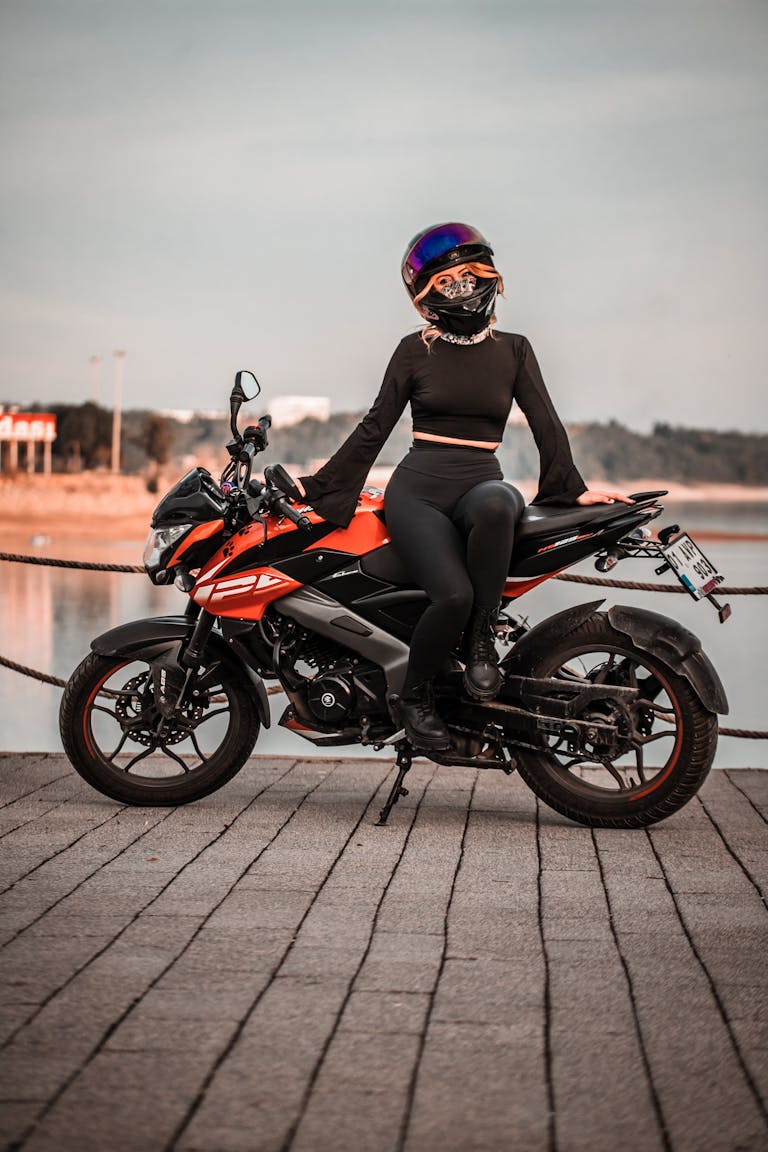
For reference: I wear Size 36 in TCX and Dainese, Size 6 in Nike Air, and Japanese size 225. I am 163 cm with a 28-inch inseam, riding a CBR250RR and a Street Triple 765.
Nobody warns you about the footwear problem when you start riding as a small woman. A jacket that is slightly too big is annoying. Pants that are too long can go to a tailor. But if a boot does not exist in your size, that is the end of the conversation — there is nothing to adjust, nothing to hem, no clever workaround. Most motorcycle footwear starts at EU 37 or 38. I am a 36, and plenty of riders who write to me through the Size Guide are smaller than that.
Then there is the second problem, and honestly it is the one that decides whether you actually enjoy riding: can you reach the ground? Every set of traffic lights, every gravel car park, every time you have to paddle the bike backwards out of a parking spot — that is where being short stops being cosmetic. At 163 cm with a 28-inch inseam, the difference between tip-toes and a flat foot is a few centimetres of sole, and a completely different level of confidence.
So this guide is not another list of twelve boots to scroll past. It is four brands — TCX, Daytona, Alpinestars and Dainese — and how each one solves the petite problem in its own way, because they genuinely do not solve it the same way. One gives you the most height. One gives you the smallest size. One covers every riding style at a sane price. One is the brand I keep buying with my own money.
Two of these boots I own and have reviewed in full. Everything else here comes from the size charts and the real rider comments I collect for the HanamiBike Women’s Gear Size Guide — over a hundred fit reports across these twelve models alone. Where a rider said something better than I could, I quote her and link the source. Where the reports contradict each other, I say so instead of pretending there is one clean answer.
Table of contents
- Quick summary: the four brands at a glance
- What actually matters when you are small
- TCX: the brand I keep buying with my own money
- Daytona: the height problem, actually solved
- Alpinestars: from sneakers to sport boots
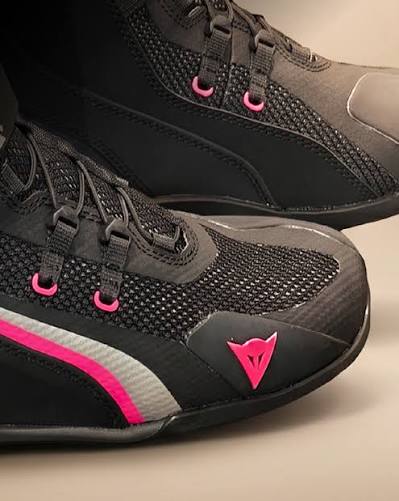
- Dainese: where EU 34 actually exists
- How much height do you actually need?
- How to use the Size Guide
Quick summary: the four brands at a glance
If you only read one section, read this one. Cannot reach the ground? Daytona builds a 6 cm raised sole into the Lady Pilot GTX, and TCX hides a lift inside the Lady Tourer GTX. Cannot find your size at all? The Dainese Suburb Air starts at EU 34, the smallest women’s riding shoe I have found anywhere. Narrow feet? Dainese and TCX. Wider feet or calves? Alpinestars, every time. And if you want one pair that looks good enough to wear into an office, that is where my own money went — TCX.
| Brand | Smallest size | Best for | Start with |
|---|---|---|---|
| TCX | EU 35 | Style, everyday wear, sensible height. Narrow to average feet | Blend 2 WP |
| Daytona | EU 35 | Maximum height boost and crash-proven build. Buy-once money | Lady Pilot GTX |
| Alpinestars | US 5 | Every style at a fair price. The only brand here that suits wide feet and calves | Stella Stated Podium |
| Dainese | EU 34 | The smallest sizes in the industry. Slim, narrow cut | Suburb Air |
Because no two riders (or feet) are the same — always check the Women’s Motorcycle Gear Size Guide for size charts and original rider comments before you press “buy”.
What actually matters when you are small
Before the brands, the four things I check — because the usual advice (“get the right size!”) is useless when your size barely exists.
1. Does the size exist, and is it ever in stock? This sounds obvious and it is the single most common reason petite riders end up in men’s boots. TCX does make a 35, but one rider hunting the smallest sizes noted it plainly: “TCX makes a women’s size 4, it should be size 35! I have this boot and love it! Right now, 35 is out of stock” (Reddit r/TwoXriders). Check stock across two or three retailers before you fall in love with a model.
2. Width, not just length. Small feet are not automatically narrow feet, and this is where brand choice matters more than size choice. The cleanest rule I have found comes from a women’s gear reviewer testing across brands: Dainese footwear suits “average to narrow feet”, and riders with wider feet “often feel pinching around the ball of the foot — try Alpinestars or TCX instead” (Motorcycle.com). Same story for calves: Alpinestars fits wider calves noticeably better than Dainese.
3. How the height is built — heel or wedge. This is the one nobody tells you, and it changed how I shop. A tall external heel gives you height but it can catch on the footpeg. One Lady Smoke owner put it exactly right: “The heel makes it hard to put my feet exactly where I want them on the pegs, it tends to hook only in one spot” (Reddit). Compare that with a rider in small TCX shoes: “they have a wedge inside so they give me height but are flat on the outside which helps me with gear shifting… with my small feet, having a heel on a boot makes it harder to shift gears” (Reddit). Internal lift or wedge = height without messing up your foot controls. Big external heel = height with a trade-off.
4. Will you actually wear them? The most protective boot in the world is useless in your hallway. I ride in Tokyo, mostly short trips, often to work — so a boot I have to change out of when I arrive is a boot I will stop wearing. Be honest with yourself about this before you spend.
TCX: the brand I keep buying with my own money
I own two pairs of TCX. That is the shortest honest review I can give you.
Two things make this brand work for us. Almost every women’s model starts at EU 35, and the women’s versions are built on a women-specific last rather than being a men’s boot shrunk down — you can feel the difference in how the ankle sits. TCX is also the brand that shows up most often in the fit reports I collect; the Blend 2 alone has seventeen sources behind it, which is more real-world data than I have on almost any other boot.
There is one trap, though, and it catches people constantly: TCX sizing direction is not consistent between models. My Blend 2 is true to length but narrow. The Street 3 runs small. The Lady Smoke runs so big that owners routinely order a full size down. “My TCX size” is not a thing. Check each model separately, every time.
TCX Blend 2 WP — the pair I actually wear
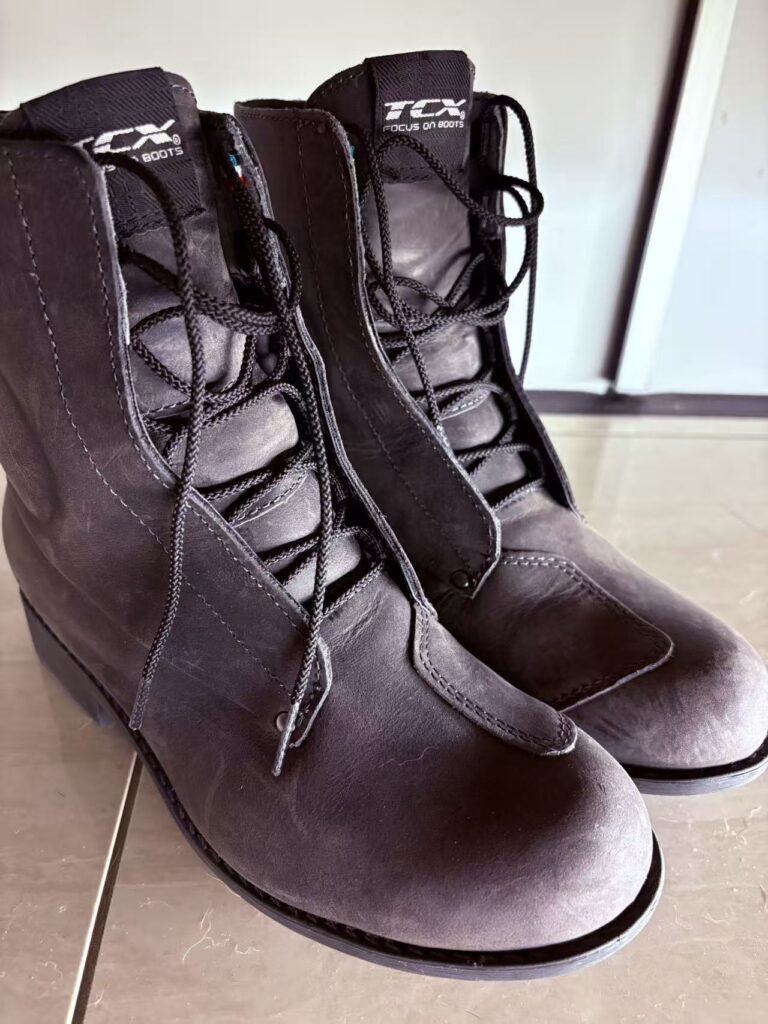
EU 35–49 · true to length, narrow footbed · roughly 3.5 cm of heel
These are the boots in the photo above, and the ones I reach for most. I reviewed them in full here — TCX Blend 2 WP review, 4 out of 5 — and the line that matters most for this article is the one about reaching the ground: with my 28-inch inseam I could almost flat-foot a 790 mm seat height CBR250RR in them. “Almost” is doing some work in that sentence, but the confidence difference at a red light was immediate.
They also do something rarer than height: they look like normal boots. I can ride to the office and walk in without changing shoes, which for me is the whole point of a commuter boot. A rider with feet almost identical to mine (5’3″, 225 mm) described the same effect from the same boots: they add “~5cm to me which makes a lot of difference for flat-footing my motorcycle, and they look discrete enough, not super obviously a platform shoe” (Reddit r/TwoXriders).
Now the width, because the reports do conflict and I want you to go in with open eyes. My experience is that they are narrow — my right foot aches after half a day of walking, and I do not have wide feet. One owner was blunter: “They’re definitely true to size length wise but my feet almost went numb… they’re made for narrower feet” (FortNine). But a long-term test found “an average-to-wide footbed accommodating wide, average and narrow feet” (MCGearHub), and MCN’s reviewer found they broke in: “the foot is narrow and sizing small, but after a couple of wears they broke in and became incredibly comfortable” (MCN). My read: expect narrow out of the box, expect a break-in, and buy somewhere you can return them.
Two things I did not have to find out the hard way. They last — one rider has “at least 40k miles on the Blend boots and I’ll probably end up replacing them with the same exact model” (Reddit). And the protection is not decorative. Two separate owners crashed in them and came back to recommend them anyway, one after a bike fell on her and broke her leg in three places, another after being hit on the highway by a distracted driver: “They are very protective, and quite comfortable” (Reddit). The honest downside everyone agrees on: they are hot. Thick waterproof leather, no airflow. Japanese summer in these is a commitment.
TCX Street 3 WP — the everyday sneaker

EU 35–45 · runs small · low sneaker profile
If the Blend 2 is my office boot, the Street 3 WP is my everything-else shoe, and in my opinion it is still the best-looking women’s cut in riding footwear — full review here, 4 out of 5. Quality-wise I have no complaints: it does not scar easily, dirt wipes off, and it has held its shape after months of wear. Compared with the cheap pair I owned before it, it is not the same category of product.
The fit warning is consistent and worth taking seriously: these run small. “They were far too tight. These run small, so I recommend ordering a half size up,” reports one buyer (Cycle Gear), and a UK 3 rider found even a size 4 “only just fit” (SportsBikeShop). The width suits me because my feet are narrower than most — if yours are not, this is not your shoe.
Here is the petite detail I love about this style, though, and it goes back to the heel-versus-wedge point above. A rider in the small TCX shoes explained why she prefers them for control: the wedge is inside, so it “gives me height but they are flat on the outside which helps me with gear shifting” (Reddit). If you have ever fumbled an upshift because your boot heel was in the way, that sentence will land.
TCX Lady Tourer GTX — height nobody can see
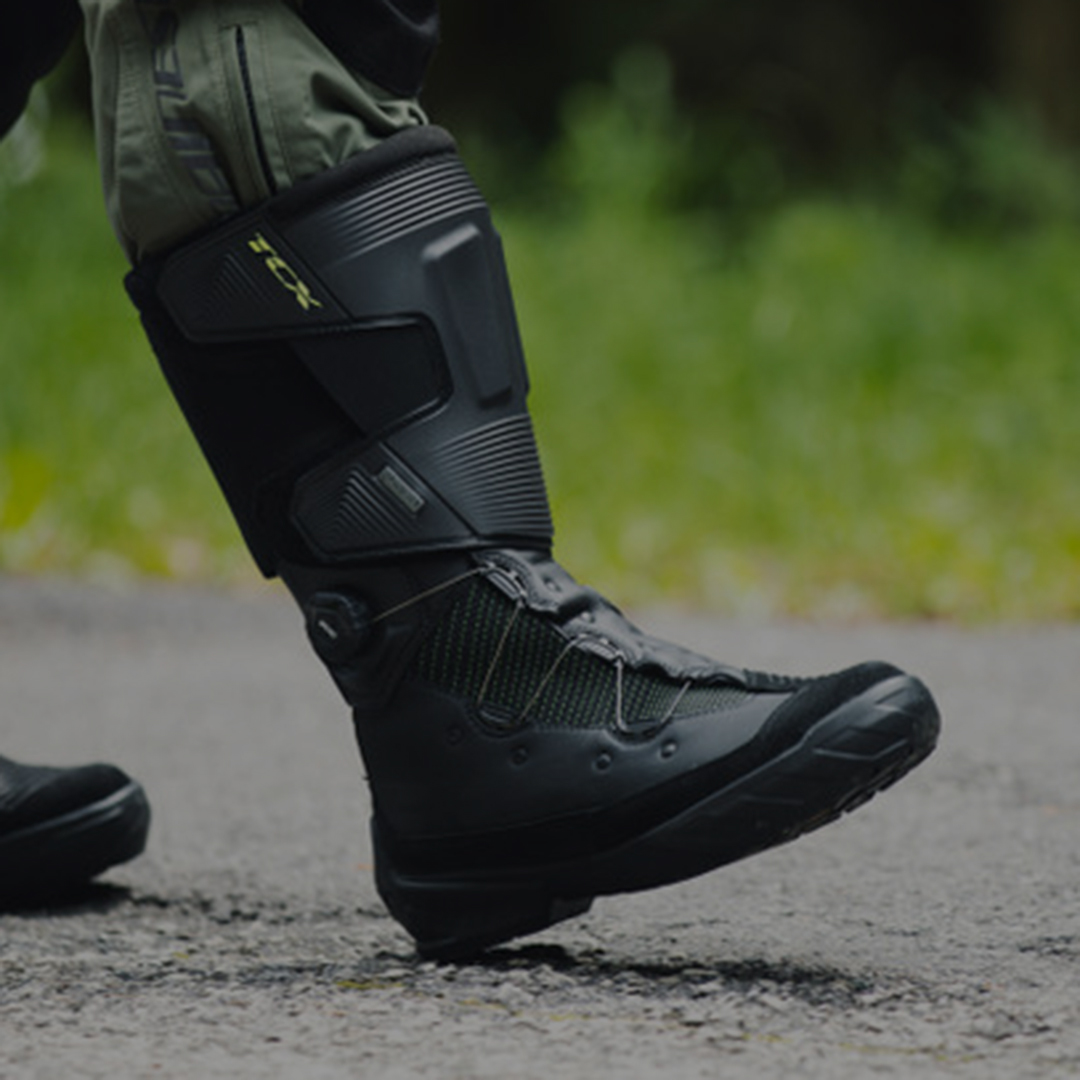
EU 35–42 · true to size · lift built inside the boot
This is the model in my database tagged “good for petite riders”, and it earns it with one design decision: the height is inside. TCX’s own product page carries a customer line that reads like it was written for this article: “Being short, these boots give me more ease on the ground; my feet touch the ground properly when standing still” (TCX official).
The best explanation of why that matters came from a rider who has tried both approaches — factory lift versus DIY: “There’s also the ones I use — the TCX Lady Tourer boots. They have an internal lift inside. It’s better than buying a lift and putting them in random boots as your ankles will be above the protection. I also have 1 inch of lift added by a cobbler” (Reddit r/motorcyclegear). That is the safety argument in one sentence. Stack a thick insole into a normal boot and you push your ankle up out of the armoured section; a built-in lift raises the whole boot with you inside it. A cobbler can add sole height from underneath too, which keeps the ankle where it belongs — a good option if you already own boots you love.
It is a proper GORE-TEX touring boot, so it is a taller, more serious boot than the Blend 2 — less “wear it into a café”, more “ride four hours in the rain”.
TCX Lady Smoke WP — vintage looks, tiny sizes
EU 35–42 · runs very big, order a full size down · noticeable heel
The Lady Smoke is the most-discussed boot in my entire database — fourteen separate sources — and the enthusiasm is real. Riders love the vintage look, love the height, and get years out of them. One described the break-in perfectly: after the first ten to fifteen hours “the leather conforms wonderfully to your feet and they feel amazing” (Reddit r/TwoXriders).
For very small feet, this boot has a specific claim to fame. “I just ordered a pair because they’re the only riding boots I have found in a women’s size 4 and I’m so excited to finally get them. Can barely contain my excitement!” (Reddit). If you have spent months finding nothing in your size, you know exactly how that comment feels.
The sizing is the loudest warning in this whole guide: go a full size down. “I have the TCX Smoke WP and love them! Really good quality, comfortable, and a good height boost. Just to warn you, I found them to run very big. Had to go a whole size down” (Reddit). Owners repeat this constantly.
And two honest gripes, because I would rather you hear them from me than after you have paid. There is no zipper — a consequence of the waterproof construction — so getting in and out is a lace-up job every time. And that lovely heel is exactly the peg problem I described earlier: “The heel makes it hard to put my feet exactly where I want them on the pegs, it tends to hook only in one spot” (Reddit). On waterproofing, a tester stood in water up to her ankles and stayed dry, but noted the top of the boot is not form-fitting, so in real rain you need over-the-boot trousers or water runs in from above (Ultimate Motorcycling).
So which TCX? If you want one pair that does commuting, coffee runs and the office without looking like race gear, the Blend 2 WP — that is where my money went. If you prefer a sneaker silhouette and better control feel, the Street 3 WP, ordered half a size up. If you tour or ride in real weather and want height nobody can see, the Lady Tourer GTX. And if you want the vintage look, or you simply need the smallest size available, the Lady Smoke WP — one full size down, and make peace with the heel.
Daytona: the height problem, actually solved
Daytona is a German maker with one clear message for riders like us: you do not have to tiptoe. They build the height into the boot, in a way no other mainstream brand commits to, and they are the name that comes up again and again when someone asks “how do I finally reach the ground?”
Two things to know before you look at the price tag. These are hand-finished GORE-TEX boots with adjustable calf closures, designed to be resoled and kept for a decade — riders describe them as “pricey but the best quality you can find” (Reddit). And Daytona sizing tends to run large: a reviewer who is “normally a Euro 37 in most shoes/boots” wears “36 in Daytonas” (GearChic). Do not order your usual number without checking the chart.
Daytona Lady Pilot GTX — 6 cm of confidence
EU 36–41 · snug through the ankle, adjustable calf · 6 cm raised sole
Daytona does not bury the headline: this is a women’s boot with “generous adjustable calf width and heel stand height of 6 cm” (Daytona official). Six centimetres is not styling. To put it in the terms that actually matter, one rider worked out it would raise her 2.36 inches and reasoned it “might help me be more flat footed at stops” (Reddit). For reference, my Blend 2 gives me about 3.5 cm and gets me to almost flat-footing a 790 mm seat. This is that, plus another couple of centimetres.
The review that convinced me to include it was not a magazine test but a partner buying them as a gift: “I needed boots for my girlfriend who struggles with leg length, we think these will make the difference for her, as when previously on tip toes she can now plant her foot on the ground. She says they are super comfortable, as a big bonus” (FC-Moto). Another rider reports her wife riding the 6 cm Pilot in a EU 37 at around 50 kg and 157 cm (Reddit r/motorcyclegear) — so this is not a boot that only works on paper for small riders.
Fit honesty: they are cut slim, and the ankle is the tight spot. A rider documenting her first fitting wrote that her calves were fine but “the ankles, well they feel a bit too snug. It is not painful, it is not exactly uncomfortable but I can feel a squeeze on the ankles” — she adjusted the velcro backs, expected the leather to give with miles, and kept them (Bikes and Travels). If you have chunky ankles, try before you buy. If you have narrow legs, the adjustable closure is your friend.
Daytona Lady Star GTX — small sizes, crash-proven
EU 35–39 · true to size but Daytona runs large · adjustable, roomy calf
Look at that size range again: EU 35 to 39, and that is the entire run. Not a men’s boot with two small sizes added at the bottom — a boot whose whole existence is small feet. It is the women’s version of Daytona’s Travel Star, the boot that won a major German comparison test outright, and the men’s twin is called the M-Star if you ever see it referenced.
This is also the only boot in this guide with a genuinely sobering protection record. A reviewer who has ridden hers from San Francisco to Los Angeles several times wrote: “Sadly, I’ve had to test these out about 4 times. Between 2 drops and 2 accidents, I’ve had to yank my foot out from underneath the bike every time” — and then the part that matters: “I’ve never had so much as a scratch or sore foot from any of these incidences” (GearChic). Her summary is a fair description of who this boot is for: ideal if you commute daily, are planning a road trip, or want a modest-looking waterproof boot with very real protection.
One caveat worth knowing if you are slim all over: the calf adjustment runs on the wide side, so “if you have narrower legs/calves then these may be too wide” (GearChic). And remember the sizing — she takes a 36 in Daytona while wearing 37 everywhere else.
So which Daytona? They are both waterproof touring boots with adjustable calves and the same build quality, so the choice comes down to one question: do you need the lift? If reaching the ground is your daily frustration, the Lady Pilot GTX and its 6 cm sole is the most direct fix in this entire article. If your feet are smaller than EU 36, or you already reach fine and just want a boot that will outlive your bike, the Lady Star GTX.
Alpinestars: the Stella line, from sneakers to sport boots
If you read my petite jackets guide, you already know my view on the Stella line: it is one of the few genuinely complete women’s ranges in motorcycling, covering casual through track, without premium-brand pricing. The footwear behaves the same way.
Alpinestars also owns a niche the other three brands here do not, and it is an important one. If you are small but not narrow — wider feet, wider calves — this is your brand. One rider’s search is the best evidence I have: “I have fairly wide calves and those shoes were the only ones in this style that did fit, no kidding, I tried over 20 models” (Reddit r/motorcyclegear). Twenty models. Petite does not mean slim, and most brands forget that.
Stella Stated Podium — the platform sneaker
US 5–11 · runs large, size down at least one · platform sole
This is the fun one — a casual riding sneaker with a platform sole that quietly doubles as a height solution. “Great for short riders like me, the platform sole helps with elevation and visibility,” writes one owner (RevZilla). Better still, here is a rider telling you exactly what it does on a real bike: at 5’3.5″ on a Z500, “I wear platform shoes (alpinestars stella podium). I can touch with both feet simultaneously, but prefer to stop with only one foot down” (Reddit r/TwoXriders).
The sizing warning is unanimous across every retailer I checked: they run large. “Usually I’m a 7 in women, I got a size 6 and they fit great” (Cycle Gear). A petite rider on TikTok landed on EU 38 / US 6.5 and called it “perfect with just enough wiggle room to spare” (small.vroom). Order a size down as your default assumption.
Two things to weigh. The ankle discs are real protection for a shoe this casual — “the ankle disks provide great protection during rides” — but the toe box is on the snug side, and a rider with a fuller foot found it “a bit tight” even though the rest fitted well (RevZilla). This is a sneaker with armour, not a boot; treat it accordingly.
Stella SMX-6 V3 — the sport boot that fits wide calves
EU 36–43 · true to size in EU sizing · vented
When the riding gets sportier, this is the Stella answer, and it has more rider feedback behind it than any other Alpinestars women’s boot I track — fifteen sources. It was named best summer boot for two years running for flowing serious air without giving up protection (MCGearHub), and a reviewer noted it is “specifically tailored for women’s narrower feet, and the streamlined cut is welcome” (Ultimate Motorcycling). On my CBR250RR this is the category of boot I would want for a proper canyon day.
Sizing here needs care because the advice splits depending on which system you start from. Tested in EU sizes it is true to size, but you should “go down by one EU size if converting from US sizes” (MCGearHub) — which explains riders finding their usual conversion off by a full size. Work in EU numbers and measure your foot in centimetres.
The gripe you should know about is the closure. It is all velcro, and not everyone gets on with it: one rider trying both this and the Supertech found the SMX-6 “really difficult to put on and take off because of the all velcro closure design” (Reddit). Others live with it happily for years. If you can try a pair in a shop, do the on-off test before you commit.
Alpinestars J-6 WP — the wet-weather commuter
US 5.5–11.5 · true to size but narrow · waterproof
My database tags this one “good for short riders” — and, tellingly, “not good for tall riders” because the size range runs out at the top. That tells you exactly who Alpinestars had in mind. It is a waterproof riding sneaker for daily use, and the detail that matters most for petite riders is underfoot: “The rubber sole provides good traction on the pegs, and there’s no slipping when putting my foot down at a stop or paddling the bike in a parking lot” (Ultimate Motorcycling). Paddling a bike backwards on tiptoes with slippery soles is genuinely frightening; grip is a safety feature.
Be realistic about what it is, though. Ankle coverage exists but it is a shoe, not a boot — one reviewer put it bluntly: it goes over your ankle, but “your ankle is not going to get crushed in these” (video review). And waterproof means warm: the same reviewer’s verdict was “this is not a good summer boot”. For Tokyo in August I would wear the Street 3 or the Suburb Air instead. Also note RevZilla buyers find them slightly narrow — not the pick for wide feet, even though Alpinestars is otherwise the wide-foot brand here.
So which Alpinestars? For casual style with real elevation, the Stella Stated Podium — one size down. For sporty riding, hot weather, or if you have wider calves that nothing else fits, the Stella SMX-6 V3. For year-round commuting in the wet, the J-6 WP, as long as you accept it is a shoe rather than a boot.
Dainese: where EU 34 actually exists
Some of you have read everything above thinking: lovely, but EU 35 is still too big for me. This section is for you.
Dainese wins one battle outright — the Suburb Air starts at EU 34, the smallest women’s riding shoe I have found from any serious brand. But there is a brand-level rule you need before you order anything of theirs, and it is the single most useful line I found in all this research: Dainese footwear suits “average to narrow feet”, and riders with wider feet “often feel pinching around the ball of the foot — try Alpinestars or TCX instead” (Motorcycle.com). Small and narrow, Dainese is your best friend. Small and wide, look elsewhere and save yourself a return.
Second Dainese quirk, and it catches everyone: their size conversion is genuinely strange. “I normally wear size 43 but Dainese’s 44 is spot on. The size chart shows a 2-size difference so be very careful when converting,” warns one owner (Motardinn). Measure your foot in centimetres and use their chart. Do not trust the number you usually buy.
Suburb Air vs Suburb D-WP — same shoe, two seasons
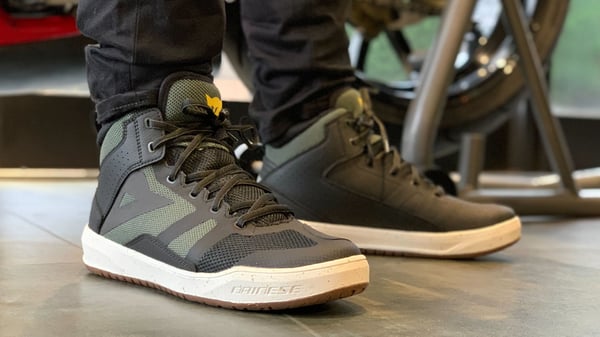
Suburb Air: EU 34–50 · Suburb D-WP: EU 36–42 · both true to size
These are two versions of the same urban riding shoe and the choice between them is almost purely seasonal — but there is a catch for the smallest feet, so read the size ranges above twice.
The Suburb Air is the ventilated summer version, and the one with the headline EU 34 start. It flows a lot of air for around a mid-range price, and here is a pleasant surprise from a reviewer who expected the usual Dainese narrowness: “these look like a pretty narrow shoe but they’re actually a little bit roomy, a little bit wider on the inside” — and he made the point that summer swelling makes that extra room genuinely useful (video review). Some owners do report a break-in period with rubbing around the collar, so wear them around the house first.
The Suburb D-WP is the same shoe made waterproof — same styling, so nobody can tell which one you are wearing. Note the range starts at EU 36, so if you are a 34 or 35 the waterproof version is simply not available to you and you are back to the Air or to TCX. Owners describe a slight platform feel, which is a small bonus for us, and confirm it stays watertight through a full season. The gripe is getting in and out: “They are very comfy but if you wear them tight (as you should), it is REALLY hard to get in and out of these. Which is kinda annoying” (video review).
Herian D-WP Ladies — waterproof from EU 35
EU 35–42 · true to size but narrow · waterproof
The Herian solves the gap I just described. If you want Dainese and waterproofing but the Suburb D-WP’s EU 36 start is one size too big for you, this one starts at 35. It is a flexible sneaker-style build, which owners say is comfortable enough to walk in all day once broken in, and it holds up: still “in like-new condition” after a full season of riding in all conditions.
It is the narrowest shoe in this section, though — even by Dainese standards. “They were a little bit on the narrow side, definitely a little bit tighter than some of the other shoes that I’ve gotten from them in the past, so if you do have a wider foot I’d probably wind up sizing up one” (video review). For slim feet like mine that is a feature. For anyone else it is a warning.
So which Dainese? If your size is EU 34 or 35, or you ride through humid summers, the Suburb Air — it is the reason this brand is in the article. If you are EU 36 or above and want the same look in the rain, the Suburb D-WP. If you need waterproof at EU 35 and have narrow feet, the Herian D-WP Ladies. And whichever you pick, measure in centimetres against their chart first.
How much height do you actually need?
Let me give you numbers you can measure yourself against, because “adds height” on a product page tells you nothing.
At 163 cm with a 28-inch inseam, roughly 3.5 cm of heel in my TCX Blend 2 gets me to almost flat-footing a 790 mm seat. A rider at 5’3″ with 225 mm feet reckons her Blend 2 and Dainese pair add about 5 cm, which she says “makes a lot of difference for flat-footing my motorcycle”. And Daytona’s Lady Pilot GTX sits at 6 cm — about 2.36 inches — which is the most any mainstream boot here will give you.
So the honest maths: a normal boot heel buys you 3 to 3.5 cm, a platform sole a little more, and a purpose-built lifted boot around 6 cm. If your inseam leaves you more than about 6 cm short of the ground on your current bike, footwear alone will not fix it — that is a suspension lowering, a lower seat, or a different bike conversation, and I would rather tell you that than sell you a boot.
And the safety point I keep coming back to, because it is the thing most people get wrong. Prefer built-in height — a lifted sole or an internal wedge — over stacking a thick aftermarket insole into a normal boot. A loose insole lifts your foot inside the boot, which pushes your ankle up above the armoured section, exactly the opposite of what you want in a crash. If you already own boots you love, a cobbler adding sole height from underneath keeps your ankle where the protection is; several riders do precisely this. What you should not do is quietly raise yourself out of your own armour.
One last thing, and it is the mistake I would most like to save you from: more height is not automatically better. A tall external heel can hook on the footpeg and make gear changes and rear brake feel worse, which is a strange trade to make in the name of confidence. If you want height, my order of preference is internal lift first, platform or wedge second, big stacked heel last.
How to use the HanamiBike Size Guide
Use this article to narrow down to two or three candidates, then do the boring part properly: look each exact model up in the HanamiBike Women’s Motorcycle Gear Size Guide and read what riders with feet like yours actually said. Sizing direction changes per model, not per brand — my two pairs of TCX fit nothing alike, and that is one brand.
If you have found something that works and it is not on this list, please tell me — you can share your gear fit here. Small-size fit reports are the hardest data to find and the most useful thing we can give each other.
Related gear guides
- TCX Blend 2 WP Women’s Boots — full review
- TCX Street 3 WP — full review
- Top Motorcycle Pants for Petite Women Riders
- Top Leather Motorcycle Jackets for Petite Women Riders
- Most Recommended Motorcycle Jackets for Petite Women Riders
- HanamiBike Women’s Motorcycle Gear Size Guide
Frequently asked questions
Which motorcycle boots come in the smallest women’s sizes?
The Dainese Suburb Air starts at EU 34 — the smallest start we found. TCX Blend 2 WP, Street 3 WP, Lady Tourer GTX and Lady Smoke WP all start at EU 35, as do the Daytona Lady Star GTX and Dainese Herian D-WP. Riders have found the TCX Lady Smoke in a US women’s size 4.
Which motorcycle boots add the most height for short riders?
The Daytona Lady Pilot GTX has a 6 cm raised sole — the biggest built-in boost on this list. The TCX Lady Tourer GTX has an internal lift, and the TCX Blend 2 WP adds about 3.5 cm of heel. Built-in lifts are safer than aftermarket insoles because your ankle stays inside the protection zone.
Do TCX boots run small or large?
It depends on the model, not just the brand. The Blend 2 WP runs narrow, the Street 3 WP runs small, but the Lady Smoke WP runs very big — owners consistently size down a full size. Always check per-model rider comments before ordering.
Can boots really help me flat-foot my motorcycle?
Yes, within limits. As one calibration point: at 163 cm with a 28-inch inseam, a ~3.5 cm heel gets you to almost flat-footing a 790 mm seat. A 6 cm raised sole like the Daytona Lady Pilot GTX adds roughly one more inch of reach. Seat shape and suspension sag also matter.